
Why Does My Baby Wake Every 2 Hours?
It is 2:17am.
You just put her down. You waited. You held your breath. You crept out of the room like you were defusing something.
And then the cry started. Again.
There is almost always a specific reason this keeps happening. A pattern that, when you understand it, makes the whole thing a lot less baffling. That’s what this post is about.
What Is Actually Happening at Night
Babies cycle through stages of light and deep sleep roughly every 45 to 60 minutes. At the end of each cycle, they surface briefly before moving into the next one.
Adults do this too. We just roll over and fall back in without noticing.
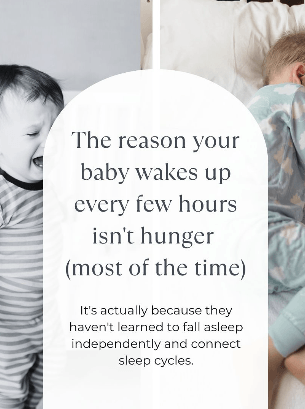
Babies have not learned that skill yet. And if your baby has only ever gone from awake to asleep with your help, her brain will look for that same help every time she surfaces. Which is roughly every 2 hours.
The rocking, the feeding, the holding, none of it is the problem. The problem is that those things have become the only route her brain knows to sleep.
This is called a sleep association. It’s the most common reason for frequent night waking in babies aged 4 months and older.
The Most Common Sleep Associations
Feeding to sleep
Baby falls asleep at the breast or bottle. Two hours later, she wakes up and needs the same thing to get back to sleep. Not hunger. Habit. Her brain linked feeding with sleep onset, so at every cycle transition, that’s the signal it sends.
Rocking or bouncing to sleep
Same pattern, different trigger. Motion is the cue. Motion is what gets looked for at 1am, 3am, and 5am.
Contact naps that never transfer
If every nap happens on you, your baby has never experienced falling asleep on a flat, still surface. The crib doesn’t match what sleep has always felt like. Of course she wakes up the moment she gets there.
But Is It Definitely a Sleep Association?
Worth checking a few other things first.
Overtiredness
A baby running on too little daytime sleep is harder to keep asleep at night. When the body is overtired it produces cortisol, which actively fights sleep. Short naps, skipped naps, or naps that only happen on you can all carry into the nights.
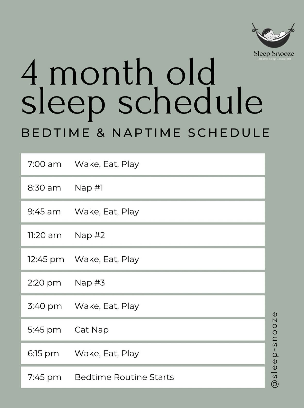
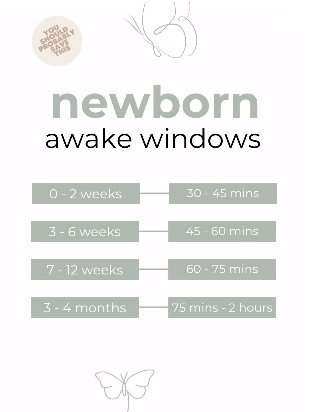
Wake windows that are off
A wake window is how long your baby can comfortably stay awake between sleeps. Too short and she goes to bed under-tired. Too long and she arrives overtired and wired. Both produce frequent waking. Getting the timing right makes a real difference.
A sleep environment working against you
Thin curtains. No white noise. A room that gets lighter at 5am. At the end of a light sleep cycle, any of these is enough to tip a baby from half-asleep to fully awake.
Hunger in younger babies
Worth considering under 4 to 5 months, particularly if breastfeeding and supply is a concern. For babies over 6 months who are growing well and eating solids, hourly waking is almost never a hunger issue.
How to Tell What’s Driving It
The pattern tells you.
How does your baby fall asleep at the start of the night? If the honest answer involves feeding, rocking, or being held until fully out, that’s your most likely answer.
What resolves the night wakings? If feeding or rocking settles her immediately every time, that confirms it.
What are the naps doing? If daytime sleep is inconsistent or all on you, the nights are usually connected.
Most of the time, those three answers point clearly to what needs to change.
What Can Be Done
The goal is to help your baby fall asleep without the sleep association.
Not leaving her alone in a dark room. Not walking away.
Teaching her a skill she does not have yet, with a plan that is clear and consistent enough for her brain to actually learn from.
There are different methods for doing this. Gradual fading of your presence. Staying in the room while reducing contact. More structured approaches.
The right one depends on your baby’s age, temperament, and what you can actually follow through on at 2am.
What does not work is trying something for 2 nights, stopping, trying something else for three nights, and repeating. Inconsistency teaches a baby that persistence gets results. More waking, not less.
A clear plan applied consistently for a week will almost always move the needle. Random approaches applied without consistency will not.
Worth Knowing
The sleep associations that are causing the waking now were not mistakes.
They were the thing that worked when your baby needed soothing. That was the right call.
What’s shifted is that she’s ready to learn something new. The question is just how to get there.
If your evenings currently involve rocking a baby back to sleep every 2 hours like some kind of exhausted human metronome, the Easy Bedtime Starter Kit is a good place to start.
Routine checklist, 5 things that actually shift bedtime and a curated book list. Free.

Hi, Divya Sharma
I'm a pediatric sleep consultant dedicated to helping working moms with babies under 1 move from survival mode to feeling calm, confident and in control by teaching their baby to sleep with simple, flexible routines and giving them the structure they need to show up rested for work, life and themselves.



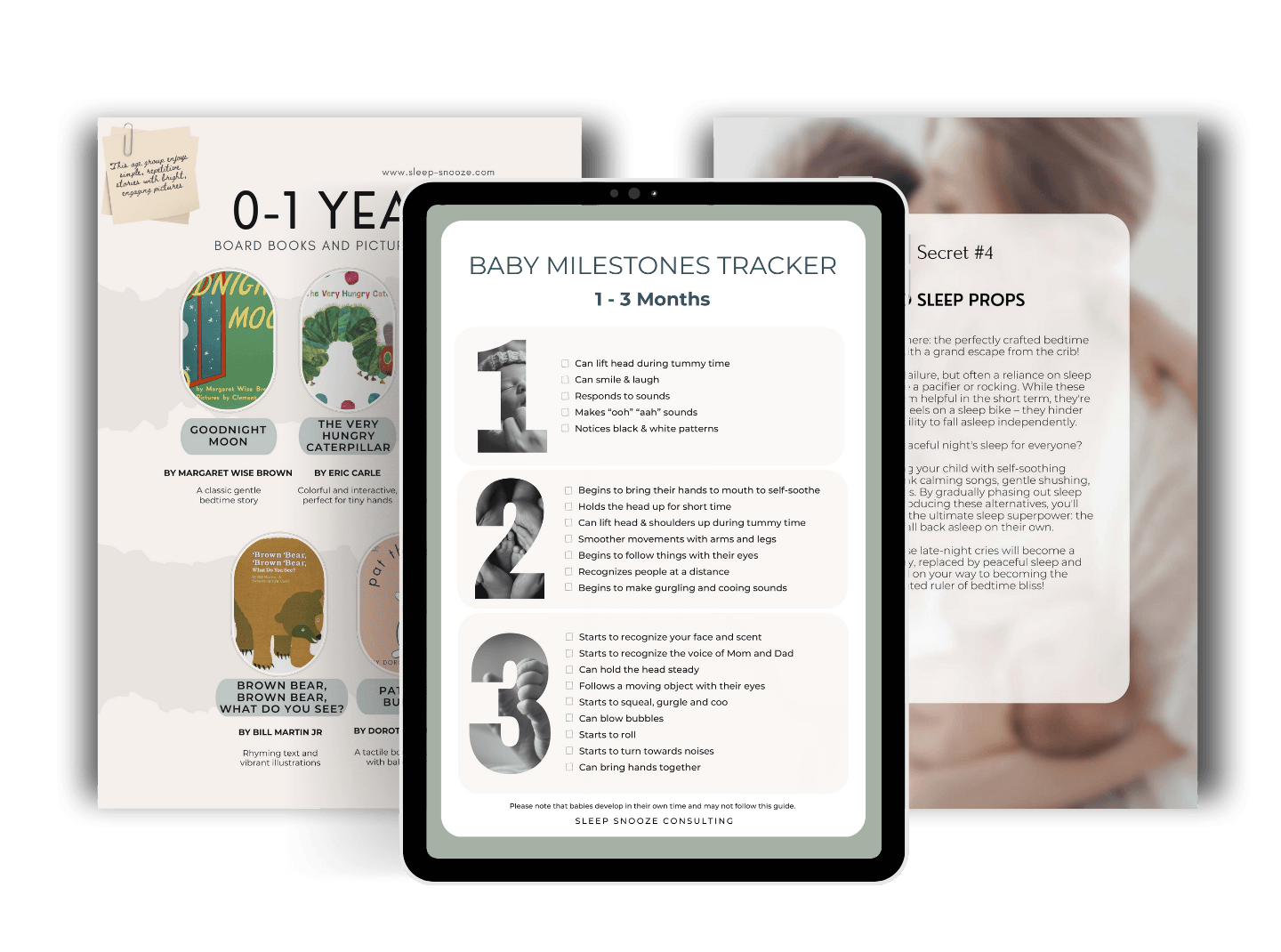
Grab The Easy Bedtime Starter Kit which includes:
The Bedtime Routine Checklist
5 Sleepy Secrets to Transform Bedtime
Curated Bedtime Booklist (Ages 0–5)
The Baby Milestones Tracker (0–12 Months)
And much more...





© 2026 Coaching by Divya FZE (No. 4310204.01). All Rights Reserved