
Going Back to Work With a Baby Who Won't Sleep? Read This First.
Four years ago, I fell asleep on a Zoom call with my CEO.
Not a quick head drop. Not a micro nap. A full, mouth slightly open, gone to another dimension asleep. In front of my CEO. On camera.
My daughter was 11 months old. The night before, she had been up every single hour.
And before you ask - no, that was not a bad week. That was just a Tuesday. It had been months of the same thing.
I had not washed my hair in 4 days. My migraines were back with a vengeance. I was dragging myself through a full time corporate role on fumes, willpower and an amount of tea that was starting to concern my GP.
And then, in front of the person who signed my pay cheques, my body just said: no. We are done here. Goodnight.
That was my breaking point.
Not my finest moment. But the moment everything changed.
If you are about to go back to work with a baby who is not sleeping, or you have already gone back and you are surviving each day by the skin of your teeth, this post is for you.
Pull up a chair. Actually, lie down if you want. You deserve it.
Maternity Leave Exhaustion vs. Back at Work Exhaustion: Not the Same Thing
Here is something nobody warns you about before you go back.
Parental leave with a non sleeping baby is a special kind of brutal. The interrupted nights, the contact naps, the groundhog day of feed-rock-transfer-repeat. All of it.
Brutal.
But it has a survivability to it that disappears the second you walk back through that office door.
On leave, you can nap when the baby naps. You can cancel plans. You can structure your day around the chaos because, to some extent, your day is yours to shape. The standards are different. Nobody is expecting you to be cognitively sharp at 9am.
Nobody is waiting on a deliverable from you at 2pm.
Back at work? Completely different game.
Suddenly you need to retain information in meetings. Write emails that make sense. Make decisions that affect real things. Hold a thread of thought for longer than 40 seconds. Present ideas to other adults who are fully rested and expecting you to perform.
All of this on what sleep researchers consistently compare to a blood alcohol level of 0.05.
The sleep deprivation did not get worse when you went back to work. The consequences of it did.
The survival strategies that got you through leave are not going to cut it anymore. The stakes are completely different now.
What Is Actually Happening to Your Brain
Let us be very clear about something. This is not about feeling a bit groggy. This is not about needing an extra coffee.
This is measurable, documented cognitive impairment.
Fragmented sleep knocks out capacity in the prefrontal cortex, the part of your brain in charge of decisions, problem-solving, and emotional regulation. Which is basically everything you need to function professionally.
In real terms, that looks like this. You forget what you were saying mid-sentence in a meeting. You send an email and immediately notice the error you made. You cry in the bathroom after a conversation that was not even that hard.
You lose confidence in your own judgment because your brain is running at half speed and you can feel it, and you cannot say that out loud because you are supposed to be fine.
You are not fine. And that is not a personal failing. That is what months of broken sleep does to a human brain. It is just biology.
The good news: biology is fixable.
The Thing Nobody Says Out Loud
There is a very specific kind of exhaustion that comes from being the default parent all night and then having to perform professionally the next morning. It is not just physical tiredness. It is the compound weight of everything layered on top of it.
The quiet resentment that builds when you have been up four times before a 9am meeting and your partner has slept straight through without so much as stirring. The strange loneliness of looking completely functional on the outside while internally you are held together with dry shampoo and sheer spite.
The way part of your brain never fully arrives at work because it is always somewhere else, always calculating hours until bedtime, always half-listening for a sound that is not there.
The mum who is doing all of it. Still showing up. Still hitting her targets. Still doing the bedtime. Still being everyone's everything.
If that is you: you are not being dramatic. You are running on empty. And you have been for long enough.
Why "I'll Sort It Later" Is the Most Expensive Decision You'll Make
Parents say this constantly. I will deal with sleep once things settle at work. I will try the routine again after the holidays. I am just going to see how the first few weeks go.
Here is what actually happens when you wait.
Sleep habits become more ingrained with every passing week. The older a child gets, the more established the patterns are and the longer a change takes to stick.
What takes 5 days to shift at 6 months can take 3 weeks at 14 months. Waiting is not neutral. It is expensive.
And here is the other thing. The urgency that comes with returning to work is actually one of the strongest motivators for finally getting a proper plan in place and following through on it.
Most parents at this point are done with dabbling. Done with the inconsistent attempts. Done with trying something for two nights and giving up. They are ready to commit to something and actually hold it.
That commitment is the single biggest factor in whether a sleep plan works.
The window is open right now. Use it.
What an Actual Plan Looks Like
Not a listicle. Not 5 tips you have already tried. An actual plan built around your specific baby, your specific schedule and the life you are actually living.
You nodded off in a meeting. You forgot what you were saying mid sentence. You cried in the car on the way home from work.
That is not failure. That is exhaustion that has gone on long enough, and it has a solution.
First: figure out what is actually driving the wakings.
Before you change anything, you need to know why the wakings are happening. Sleep association? A schedule that is off? Overtiredness that is carrying over from terrible naps? Each cause has a different fix, and throwing the wrong solution at it wastes time you genuinely do not have right now.
Second: sort the foundations.
Proper blackout. White noise running all night, not just at the start. A bedtime routine that signals sleep clearly. A schedule matched to your child's sleep pressure for their age. This is not optional extra credit. This is the structural layer everything else sits on. Skip it and nothing else works properly.
Third: pick a method you can actually hold.
The method matters far less than the consistency. There is absolutely no point choosing an approach that feels completely wrong, because you will not follow through at 2am when you are exhausted, emotional, and your resolve is at its absolute lowest. Pick what fits. Then hold it.
Fourth: expect something real within a week.
Most families with a clear, consistent plan see a meaningful shift within 5 to 7 nights. Not perfection. Not twelve uninterrupted hours from day one. But fewer wakings. Shorter resettles. Something that starts to feel like a predictable night rather than a lottery. Enough to change how you show up the next day.
Over 100 Families Have Done This. You Are Not the Exception.
I have worked with more than 100 families as a certified sleep consultant. Working mums, expat mums, default parents running on empty, women heading back to demanding roles with babies who have never slept a full stretch.
Every single one of them thought their situation was the one that would not work. Their baby was too wakeful. Too attached. Too sensitive. Too used to the contact naps.
Every single one of them saw change when they had a plan that actually fit their life.
Your baby is not broken. The situation is not permanent. The only thing missing is a plan built around your specific circumstances rather than a generic approach designed for someone else's baby.
A Word on the Guilt
Wanting to fix sleep can feel selfish. Like prioritising your own rest over your baby's needs.
It is not.
A rested parent is more patient. More regulated. More genuinely present during the daylight hours when presence actually counts. Getting your baby's sleep sorted is not choosing yourself over her.
Your capacity and her wellbeing are not competing things. They are the same thing, looked at from two angles.
You deserve to go to work without dreading every hour of it. To sit on the couch after bedtime and feel like an actual person. To stop treating the next wake-up as the most important variable in your entire life.
The Plan Exists. You Just Don't Have It Yet.
You walk into your first week back at work having actually slept. You are not reconstructing sentences mid email. You are not muting yourself on every call to yawn. You are not sitting in a 3pm meeting fantasising about the floor.
That is not a fantasy. That is just a plan you do not have yet.
If you are returning to work in the next few weeks and your baby's sleep is not in a good place, now is the time to get that plan. Not after the first week back. Not once you see how it goes.
Now, while you have the bandwidth to implement something before you have to perform professionally on broken sleep.
And if you are already back and this is your reality right now, reach out. There is always a way forward.

Hi, Divya Sharma
I'm a pediatric sleep consultant dedicated to helping working moms with babies under 1 move from survival mode to feeling calm, confident and in control by teaching their baby to sleep with simple, flexible routines and giving them the structure they need to show up rested for work, life and themselves.



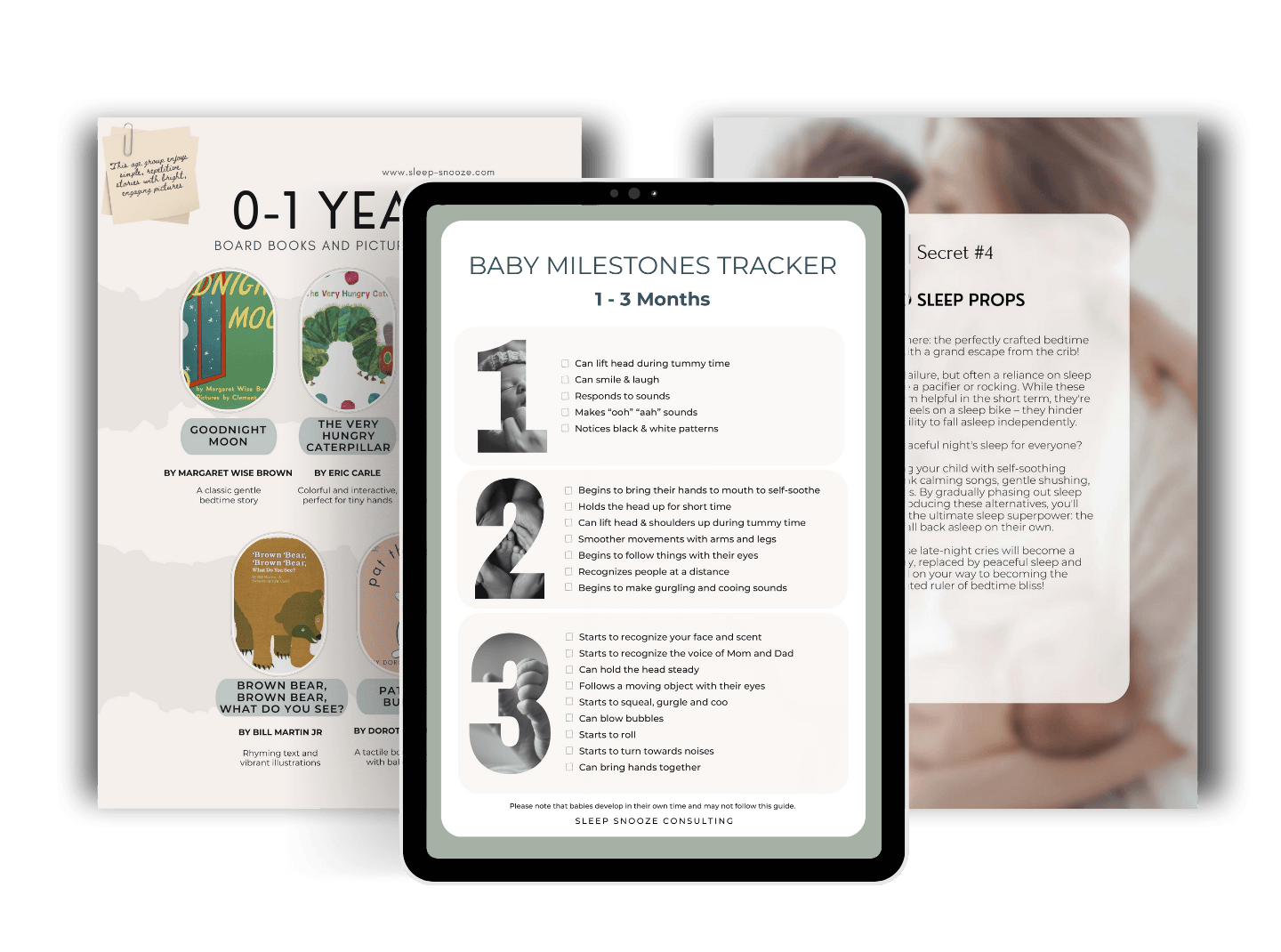
Grab The Easy Bedtime Starter Kit which includes:
The Bedtime Routine Checklist
5 Sleepy Secrets to Transform Bedtime
Curated Bedtime Booklist (Ages 0–5)
The Baby Milestones Tracker (0–12 Months)
And much more...





© 2026 Coaching by Divya FZE (No. 4310204.01). All Rights Reserved